
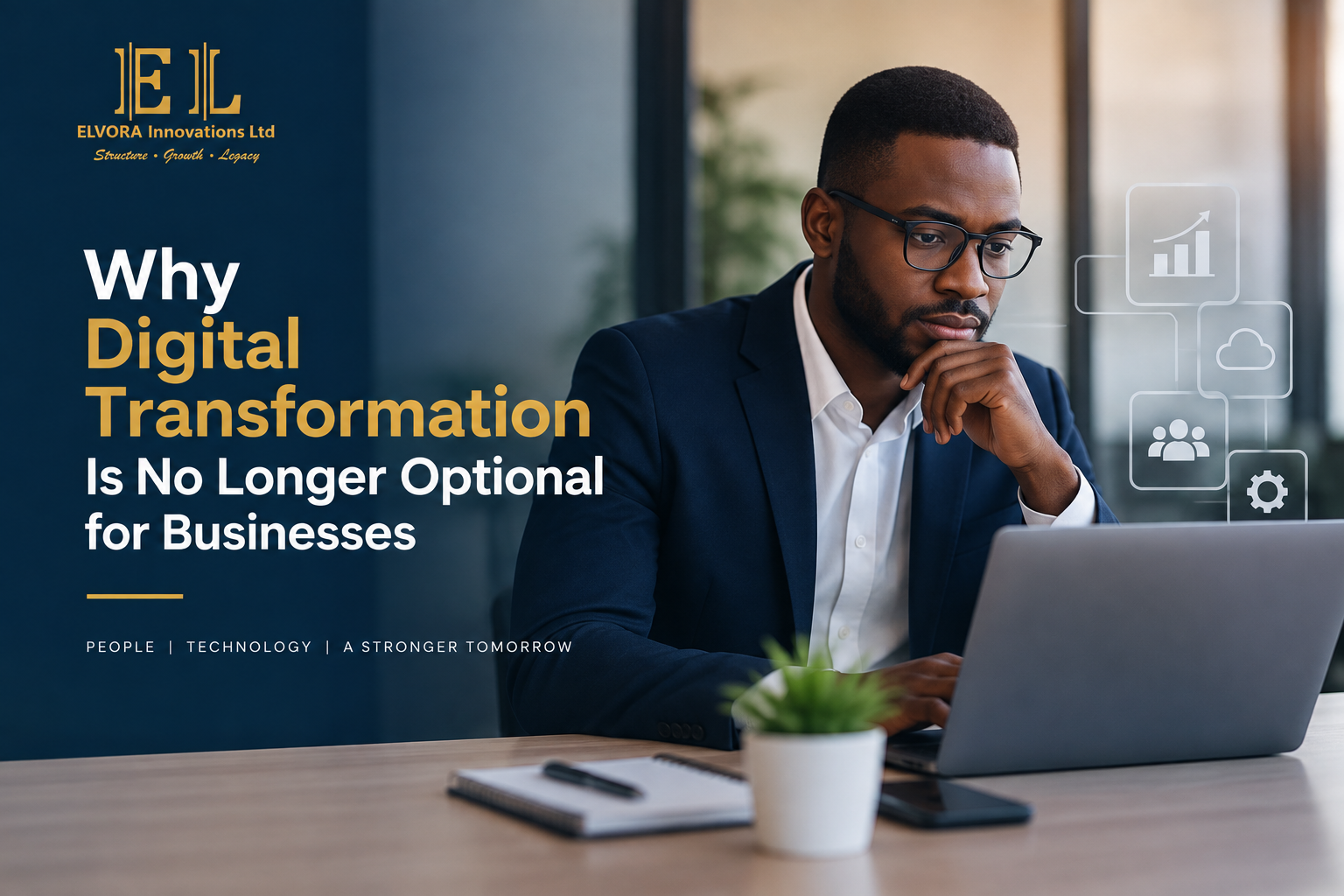
Why Digital Transformation Is No Longer Optional for Businesses
Technology is changing the way businesses operate, compete and serve their customers. From digital payments and cloud platforms to automation, artificial intelligence and data-driven decision-making, technology is no longer something businesses can simply choose to adopt when convenient.
For many businesses, digital transformation has become a necessity for staying relevant and competitive.
But what exactly does digital transformation mean, and why has it become so important?
Beyond Going Digital
Digital transformation is often misunderstood as simply having a website, using social media or introducing a new software system.
It goes much deeper than that.
Digital transformation is about rethinking how a business operates and creates value by using technology more effectively.
It can mean automating repetitive processes, improving customer service, adopting digital payment systems, using data to make better decisions, building digital products or creating more efficient ways for teams to collaborate.
The objective isn't to use technology for the sake of technology.
The objective is to build a better business.
Customers Expect More
The modern customer is increasingly comfortable with digital experiences.
People want to discover businesses online, communicate through digital channels, make payments conveniently and access services without unnecessary delays.
As these expectations continue to grow, businesses that rely entirely on traditional processes may find it increasingly difficult to meet customer expectations.
Digital transformation allows businesses to create experiences that are faster, simpler and more convenient.
Efficiency Can Become a Competitive Advantage
Imagine a business where employees spend hours every week performing tasks that could be automated.
There may be unnecessary paperwork, repeated data entry, manual reporting or inefficient communication between departments.
Technology can help eliminate many of these bottlenecks.
When businesses automate the right processes, employees can spend more time on activities that require creativity, judgment and human interaction.
The result can be a business that operates faster and more efficiently.
Data Is Changing How Businesses Make Decisions
Every business generates data.
Customer interactions, sales, expenses, website activity, operational performance and other business activities create information that can reveal important patterns.
The challenge is knowing how to use it.
Digital systems can help businesses organise and analyse their data, providing insights that support better decision-making.
Instead of relying entirely on assumptions, businesses can begin asking:
What does the data tell us?
That shift can have a significant impact on strategy and growth.
Competition Is No Longer Defined by Size
Technology has also changed competition.
A small business with the right digital infrastructure can reach customers across different locations, operate efficiently and deliver services at a scale that was previously difficult to achieve.
This means businesses cannot depend solely on size, location or established reputation.
Adaptability matters.
The businesses that are willing to understand changing technology and respond to changing customer behaviour are often better positioned to take advantage of emerging opportunities.
Transformation Starts With the Problem
However, digital transformation does not mean that every business needs to adopt every new technology.
A company does not need to use artificial intelligence simply because everyone is talking about AI.
It needs to understand where technology can solve a real problem.
Before investing in a digital solution, businesses should ask:
What problem are we trying to solve?
Where are we losing time or resources?
What do our customers need?
Which processes can be improved?
What information can help us make better decisions?
Can technology help us prepare for future growth?
The answers should determine the technology—not the other way around.
The Human Side of Digital Transformation
Technology alone cannot transform a business.
People are at the centre of every successful transformation.
Employees need to understand new systems. Leadership needs to provide direction. Processes may need to change. Teams need to collaborate differently.
This is why digital transformation should be approached as a business strategy, not simply an IT project.
The technology is the tool.
The transformation is the change in how the business works.
Building for What Comes Next
At Elvora Innovations Ltd, we believe innovation should be purposeful.
Technology should solve problems, improve experiences and create opportunities for sustainable growth. It should help businesses become more efficient today while preparing them for the demands of tomorrow.
The future will continue to bring new technologies and new ways of doing business. The businesses that succeed will not necessarily be those that adopt every new trend.
They will be those that understand which technologies matter, why they matter and how to use them effectively.
Digital transformation is therefore no longer simply about keeping up with technology.
It is about keeping up with the world.
And the question for businesses is no longer:
“Do we need to go digital?”
It is:
“How do we transform intelligently and build for what comes next?”
Structure. Growth. Legacy.
Elvora Innovations Ltd.